






Discover how others found support and clarity when getting answers for myasthenia gravis (MG) wasn’t easy.
When Alicia* couldn’t get clear answers about why she was experiencing unsettling eyelid drooping that changed from day to day, she left her doctor’s office in tears. The changes in her body didn’t stop at her eyes; they began to affect other parts of her body. Simple things like picking up a cup, holding a water bottle or brushing her teeth became difficult. “How am I going to live like this? I can’t keep having these symptoms where my function is limited,” she thought. However, as her frustration grew, so did her determination to get clear answers on what she was experiencing.
Seronegative MG can be harder to diagnose because blood tests don’t always pick up the antibodies causing symptoms.
Facing the unique challenges of less common subtypes of MG
MG is an autoimmune disease that disrupts the normal communication between nerves and muscles. The immune system makes harmful antibodies that attack the connections needed for nerves and muscles to work together. However, MG isn’t the same for everyone. There are different subtypes based on which antibodies are found in the body. Triple-seronegative MG is a subtype diagnosed in people who have MG symptoms, but their blood tests don’t detect the known antibodies.
Overview of MG subtypes |
AChR antibody-positive MG |
MuSK antibody-positive MG |
LRP4 antibody-positive MG |
Triple-seronegative MG |
Nicola* lives with LRP4 antibody-positive MG, and like Alicia, she faced challenges having her symptoms recognized as MG. Despite being hospitalized four times in two years, Nicola faced doubts from others about the symptoms she was experiencing. “I had situations where people didn’t believe anything was wrong with me,” Nicola shared. Nicola’s journey to diagnosis wasn’t straightforward, and that’s often the case with less common subtypes of MG.
For people with less common subtypes of MG, standard antibody tests may not detect the known antibodies, and symptoms can be difficult to recognize. This may lead to a delayed diagnosis. Additionally, people with MuSK antibody-positive MG, LRP4 antibody-positive MG or triple-seronegative MG may have a challenging time finding the right treatment.
I had situations where people didn’t believe that I had anything wrong with me.
Self-advocacy in action
Both Alicia and Nicola learned firsthand how important it is to speak up for themselves. Alicia saw several doctors, each offering a different perspective on the cause of her symptoms. Some told her she might have other diseases with symptoms similar to MG. “Seronegative MG can be harder to diagnose because blood tests don’t always detect the antibodies causing symptoms,” Alicia explained. This means it’s not as easy for healthcare providers to see evidence of MG.

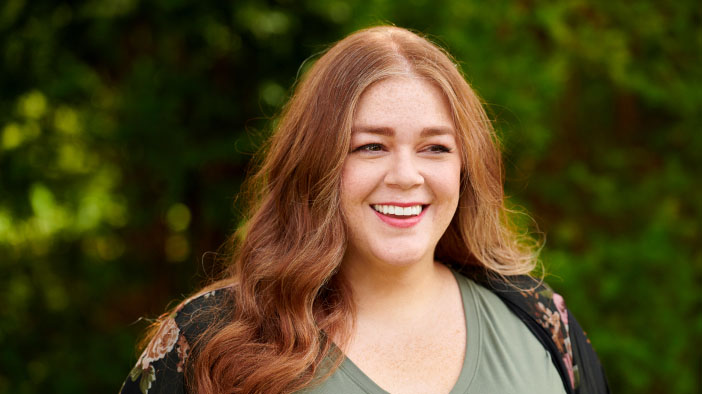 Alicia, living with triple-seronegative MG
After being told that her symptoms might be due to anxiety, Alicia refused to settle for that answer. Instead, she found better ways to communicate her experiences with her healthcare team until she was finally diagnosed. “When my doctor gave me a final diagnosis of seronegative MG, he said, ‘this is urgent because now it’s affecting your voice, chewing and swallowing. What could be next is your breathing.’”
As Nicola’s symptoms developed over time and included moments that were sudden and severe, learning how to share what she needed became key. “I’ve experienced MG symptoms where I couldn’t breathe or talk, so I couldn’t effectively communicate exactly what was going on.” After experiencing several hospitalizations due to MG, Nicola asked herself, “What should I do differently to better communicate with my doctor?” That question led her to find more effective ways of working with her healthcare team.

 Nicola, living with LRP4 antibody-positive MG
Five tips to stand strong and advocate for your care
Alicia’s and Nicola’s experiences show how important it is for people with less common subtypes of MG to speak up about their symptoms, especially when symptoms don’t fit textbook descriptions. Self-advocacy may help you get the right support and the care you need.

1. Take time to learn about the unique aspects of your MG subtype.
“Know the facts and stay up to date on the latest research about MG,” says Nicola. Understanding the specific details for your type of MG can give you the confidence to stand by your experiences and advocate for yourself. “The more you learn, the easier it is to have meaningful conversations with your healthcare team,” adds Alicia.

2. Work with your healthcare team to address challenges related to your specific subtype of MG.
It’s important to work with a healthcare team that understands the different types of MG. Collaborating with your healthcare team is key to getting the support you need. “Your healthcare team has medical expertise, but you’re the patient—you know what it feels like in your own body,” shares Alicia. This means being clear about the impact of your symptoms and working with your healthcare team to find tailored solutions for your MG subtype.

3. Keep an emergency folder with important medical information.
When Nicola experienced an MG crisis and needed to call an ambulance, having her emergency folder made all the difference. “Print out an official diagnosis letter signed by someone from your healthcare team and keep it in the folder,” she advises. This is especially helpful if MG symptoms affect your ability to speak during an emergency. When paramedics arrived, Nicola simply handed them the folder, ensuring they had all the details they needed to help her quickly and safely.

4. Take photos and voice recordings to capture both your MG symptoms and your good days.
Because your healthcare team doesn’t see you outside of appointments, having this record helps show the difference between how you look and sound with symptoms, versus when you’re doing well. For example, if MG affects the muscles in your vocal cords, your voice may sound softer or weaker when experiencing MG symptoms. Without a comparison to your normal voice, your healthcare team might not realize the extent to which MG impacts your voice and your overall well-being. “Do as much as you can to help your healthcare team understand what’s happening when you have MG symptoms. Get clear about where you are feeling these symptoms,” Alicia suggests.

5. Join an MG support group to connect with others who may have your subtype of MG.
MG support groups offer more than just peer support. “I learned so much from others, like how to prepare for certain tests—information I wouldn’t have known otherwise,” shared Nicola. Hearing firsthand experiences from others may help you better prepare for doctors’ appointments. Talking with others may also help you identify specific needs and concerns to discuss with your healthcare team based on your subtype of MG.
Owning your voice and your journey
Speaking up about your experiences with a less common MG subtype can help bridge communication gaps and create stronger partnerships with your healthcare team. Want to learn how to start the conversation? Download the MG Management Discussion Guide. It’s a great tool to help guide the conversation at your next appointment on what matters most to you. Owning your power by speaking up about your experiences can make a real difference and help bring you one step closer to reaching your goals with MG.






 Facebook
 X
X Pinterest